01 January 2011

Sex Change.

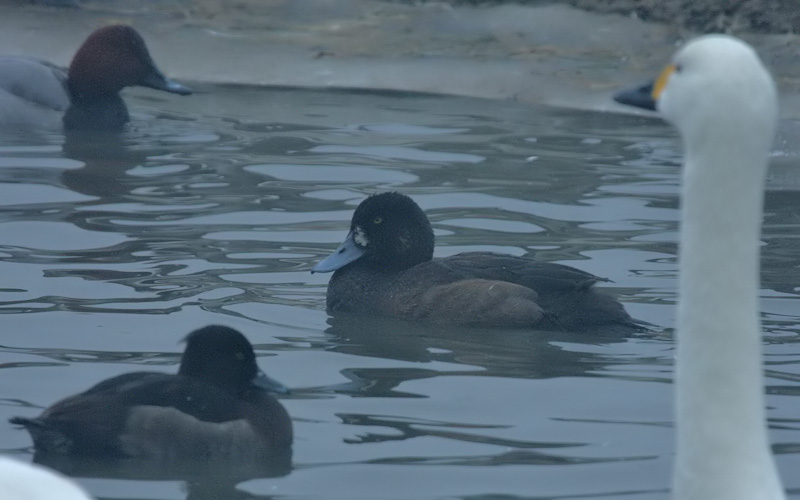
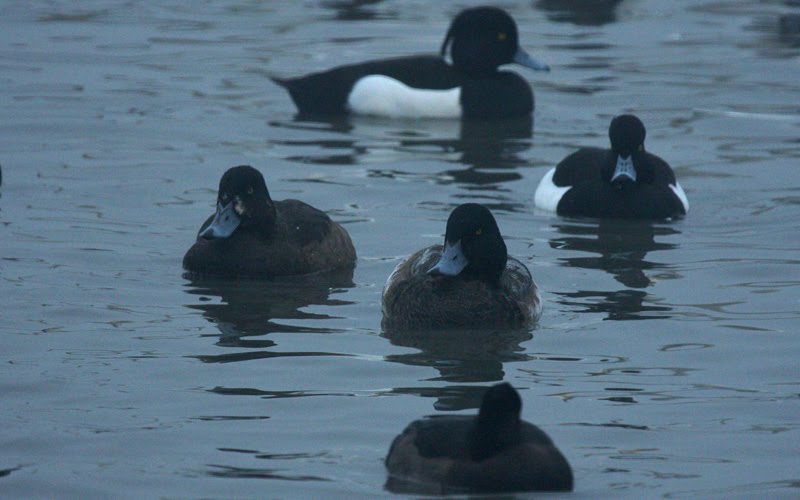
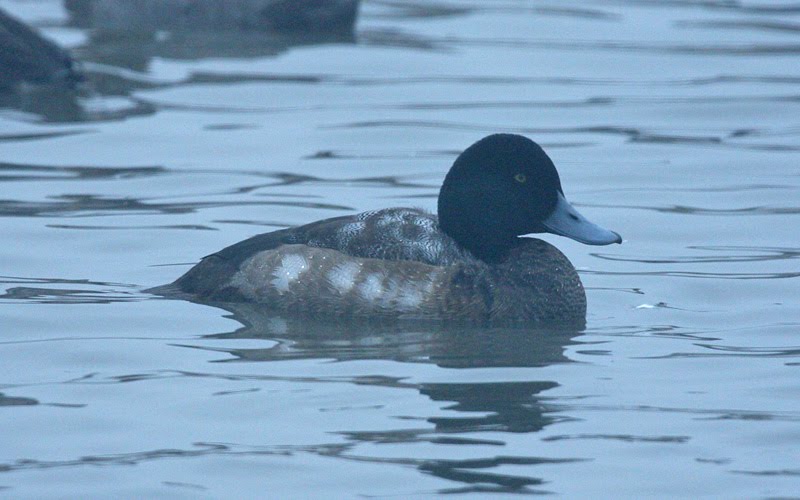
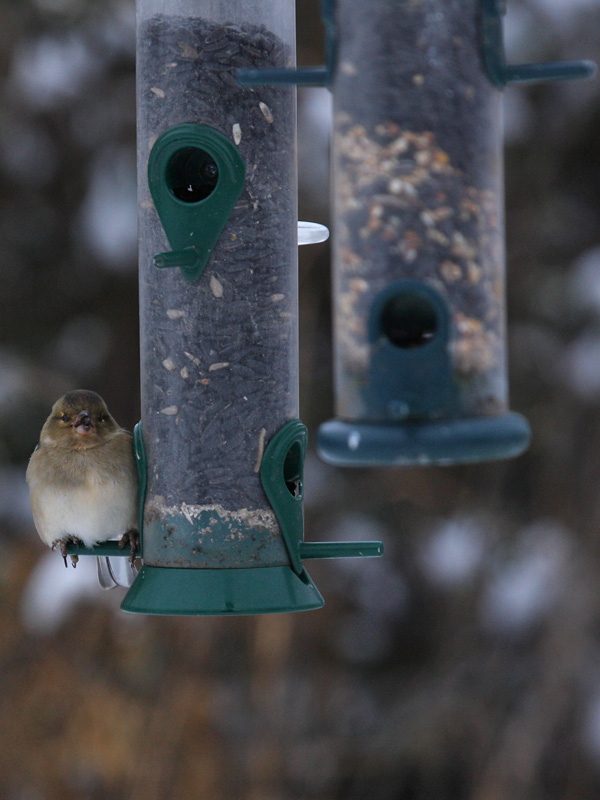
re: the Slimbridge Greater Scaups. Apparently, this (below image) is a less advanced (than the other) male Greater Scaup and not, as I thought, a female.


Intriguing.

30 December 2010

Devon + Fog.

With time running out, it was a shameless attempt to add to my year list. I had to go today - despite the blasted fog... New Year's Eve being full of celebrations and all that jazz.

Mostly frustrating, to be honest.

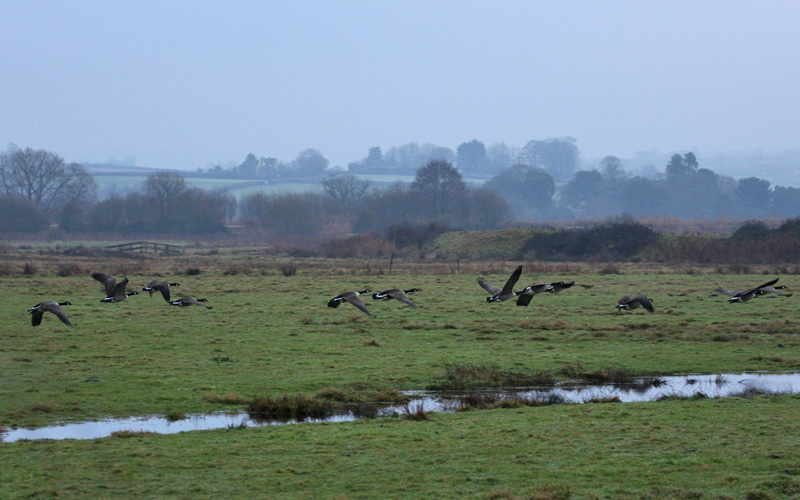
At Exminster Marshes between 0900hrs and 1030hrs, there was no sign of any Harriers. Teal, Wigeon, Shoveler, Black-tailed Godwit, Redshank, Lapwing, one Grey Heron, one Kestrel, one Buzzard picking apart a prey item, Redwing, various Tits, one Bunting sp., Grey Plovers. Alas, I could not find the Water Pipits... or they wouldn't find me. Oh, and there were Canada Geese - truly a rarity.


I know that before midday a female Marsh Harrier, ringtail Hen Harrier and a couple of Bitterns showed, but I think (or hope, actually) that I had moved on by then.

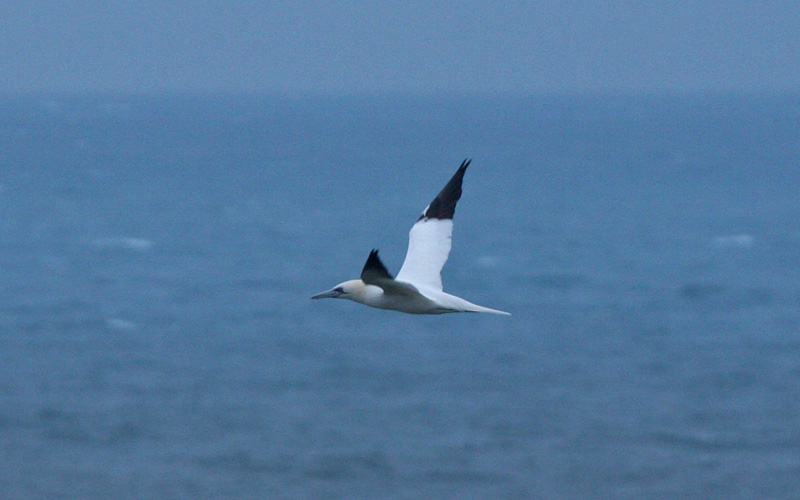
Undeterred, I moved onto Dawlish. Not the Warren, but a two and a half hour stint atop Langstone Rock. This was the most profitable portion of the day. The sea was rough but there was plenty of action. At least 30 Gannets, 5 Oystercatchers flew past, many Great-crested Grebes and one Little Grebe were the run of the mill stuff. I didn't see any Black-necked or Slavonian Grebes, or - most disappointingly - no Eiders. Still, there was a flock (c.15 birds) of Common Scoter (year tick 211; lifer 223) with another group of six or seven birds flying past, four Black-throated Divers (year tick 213; lifer 225) on the water and one Red-throated Diver (year tick 212; lifer 224). I expect there were more about but I'm quite the novice at sea watching. Many Razorbills flew past. A few landed on the water, some of which I reckoned were Guillemots (a hoped for year tick) but I just wasn't sure. I don't think I would've been able to pick out the female Surf Scoter had I seen it (I don't think I did). I thoroughly enjoyed the sea-watch though, and will definitely do it more regularly next year - ideally before the end of winter.


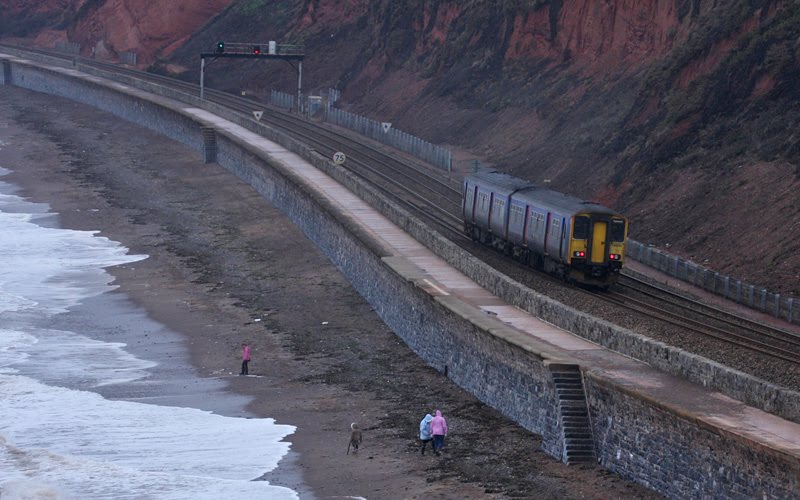
There were also trains. Frequent trains.


The fog wasn't proving a problem, so at about 1330hrs I decided to hit the last big target of the day - Cirl Buntings. Off I went to Labrador Bay. Hmmmmmmmmmmmmmmmmm. Upon arrival it became clear that all the fog had congregated there. It was horrendous. One couldn't see more than a few meters ahead, it was very cold and the wind was howling. In short there was no chance of seeing a Cirl. Even being outside was quite a challenge, and not in the way that it's a challenge to get out and about in snowy conditions. This was truly unpleasant. The Cirls will have to wait for another day. On the plus side, at least I know the way.

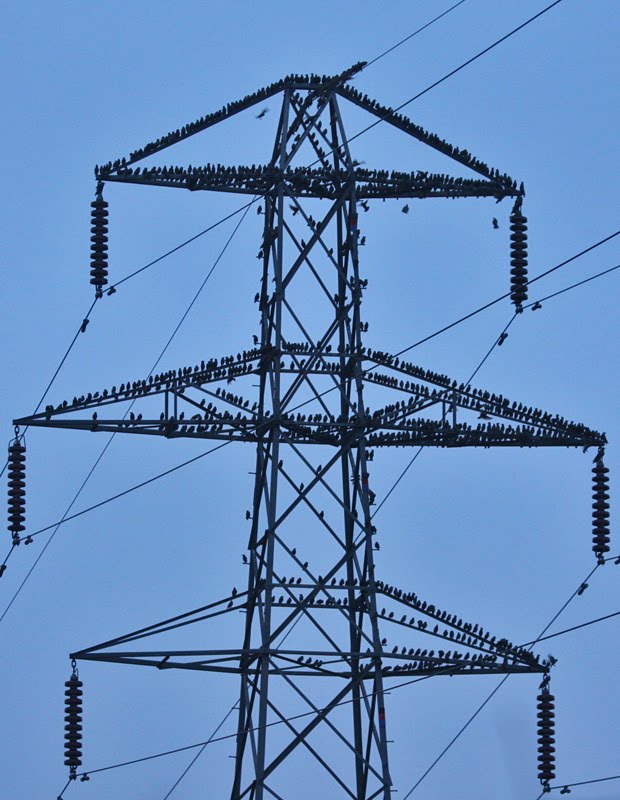
I decided to go back to Exminster Marshes to use the remaining daylight hoping the Hen Harrier would show for me. Needless to say it did not, and neither did the Water Pipits. I decided that if I strayed too far from the scrapes (to find the redhead Smew, for example) I would miss something. In retrospect I can safely say I would've missed nothing. Except Starlings...


Should've gone back to Dawlish, really. The Exe area is smashing for birds though. Part of the problem is choosing where to go - so many places to pick from. I think my next sortie will involve a good study of the estuary, another pop at the Cirl Buntings and more time on Langstone Rock. Orcombe Point and Broadsands are two other spots I hear good things about.

A mixed day. I'm pleased to have added three more birds to both my year list and life list, but to be honest I had hoped for more. I seem fated to forever miss Hen Harriers. I think my birding new year resolution has to be to make better decisions. I know that it's a lot to ask to get everything one wants in one day trip, but I rarely seem to get above a 50% 'hit rate', which IMO needs to be improved in 2011.

So (of desirables) did see:

Common Scoter
Red-throated Diver
Black-throated Diver

Didn't see:

Cirl Bunting (weather prevented it)
Eider
Slavonian Grebe
Hen Harrier
Water Pipit

29 December 2010

Scaup-fest at Slimbridge.

Well, two Scaup.

Slimbridge has delivered the goods recently. Hot on the heels of the Gannet and Woodcock last week, two 1w Greater Scaup were found on the Rushy Pen yesterday. Despite foggy conditions, they were too big a lure.


One male, one female. The male was beginning to show the lovely grey vermiculations typical of an adult bird. It was good to see two examples of the species at an age I'd not seen before. Indeed, in with all the other birds present on the Rushy - particularly all the Tufties - the difference in scale between Scaup and Tufted Duck was extremely apparent. Close views most useful.

My only two previous Scaup sightings were the adult male at Cotwsold Water Park (West) and the female I spotted distantly at sea just off Hinkley Point in Somerset. Both were in March of this year.


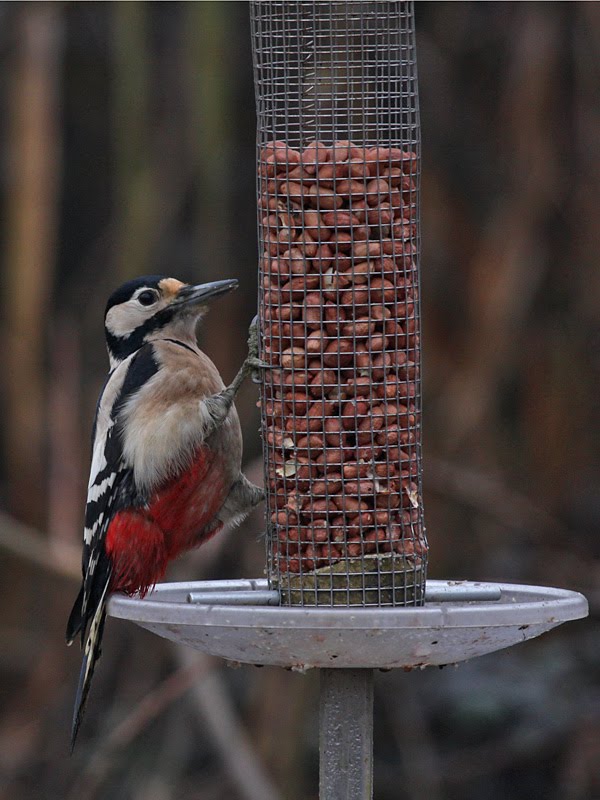
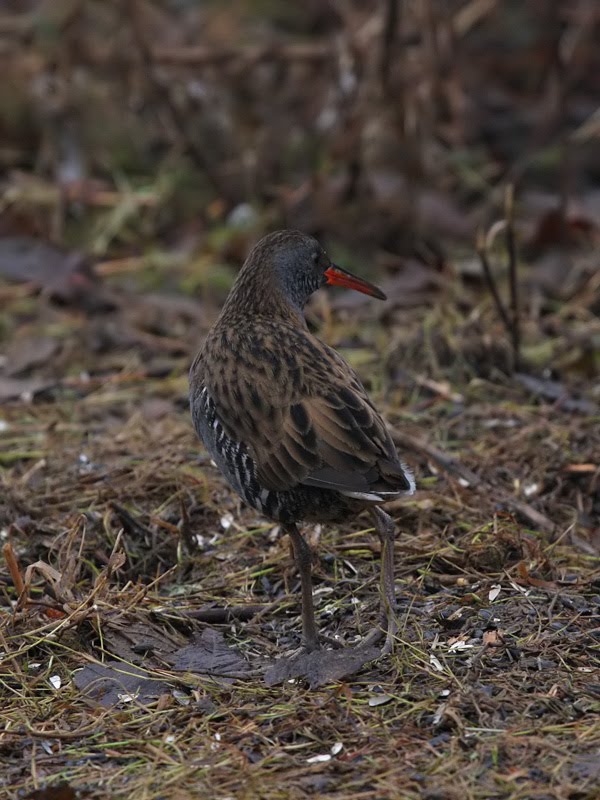
I went down to the Kingfisher Hide, but the Whitefronts were absent, so as a last resort I tried the feeders enroute to the Holden Tower. Not only did the Great Spotted Woodpecker pay me another visit, but the (seemingly) resident Water Rail also showed very well.


That was my third Water Rail of the year. The first came on January 1st from the 100 Acre viewing platform at Frampton (it stood out on the ice at the rear), and the second came at the second hide down from the road (or first from the beach) at Porth Hellick on Scilly in September.

24 December 2010

Northwick Warth and Aust Warth.


A chilly, snow covered day between the two Severn crossings. I went specifically for the male Merlin, which duly appeared within two seconds of setting up my scope at Aust Warth. I watched (distant views, but passable through the scope) it fly low over the vegetation for about ten seconds, perch briefly and then spring upwards to pursue a Pipit. Then I lost it - and didn't see it again.

A large female Sparrowhawk flew directly overhead, and a Kestrel lazily flew along the shoreline.

I decided to walk down to Northwick Warth to the gate midway along the footpath. From there, at 1110hrs, I observed a large Harrier casually flying NE upriver over the Warth. It wasn't hunting, just 'ambling along'. It flew off towards the first Severn crossing, and out of range. Now, I felt strongly that this bird was a female / juvenile Marsh Harrier. No markings on the tail (absolutely no white rump), consistently very dark, and a noticably heavy (for a Harrier) build. In argument against, and to be honest, lighter markings on the head were hard to discern. But still, the unmarked tail and no white rump sells it for me.

I spoke with another birder who said that a ringtail Hen Harrier had been seen shortly before at New Passage. In addition, RBA has a ringtail Hen Harrier sighted flying NE over Chittering Warth at 1015hrs and Severnside Birds has a shot of an obvious Hen Harrier (probably the same individual). The site reports that the Hen Harrier stayed the afternoon at Aust Warth (from 1340hrs onwards) and also roosted there. So it lingered. Long before that my bird disappeared completely out of sight and for the remaining duration of my visit did not return... so I stick by my identification as a female / juvenile Marsh Harrier.

I'd love what I saw to be the Hen Harrier (it would've been a long overdue lifer), but it wasn't. Infact, given that I chose to visit today I consider myself unfortunate to have missed it. I realise that all this sounds awfully coincidental and that the simplest explanation is that there was no Marsh Harrier. But the thing is... there was. I think a Hen Harrier stayed for the day, and a Marsh Harrier passed through.

I drove down to New Passage hoping to find the Merlin, but the wind was getting up and so the temperature really began to take its toll. Plus, the Merlin didn't show. Finally, another 30 minute stint at Aust Warth was as far as my box of Maltesers would take me. I left 20 minutes (at 1320hrs) before the definite Hen Harrier showed well at Aust! By then, the Marsh Harrier was long gone...

Weatherman says the Sun will come out tomorrow.

23 December 2010

Great Visit to Slimbridge.

Given the weather, the reserve was light on people and heavy on birds. The best combination!

After buying some ace Christmas-but-not-Christmas cards from the shop (and a new feeder), I headed out first to the South Lake. Most of the water was iced over, but there were two oases of water for the birds to use. A good selection of wildfowl - Gadwall, Pintail, Teal, Pochard, Wigeon, Greylags, many Mute Swans with a few Bewicks for good measure.


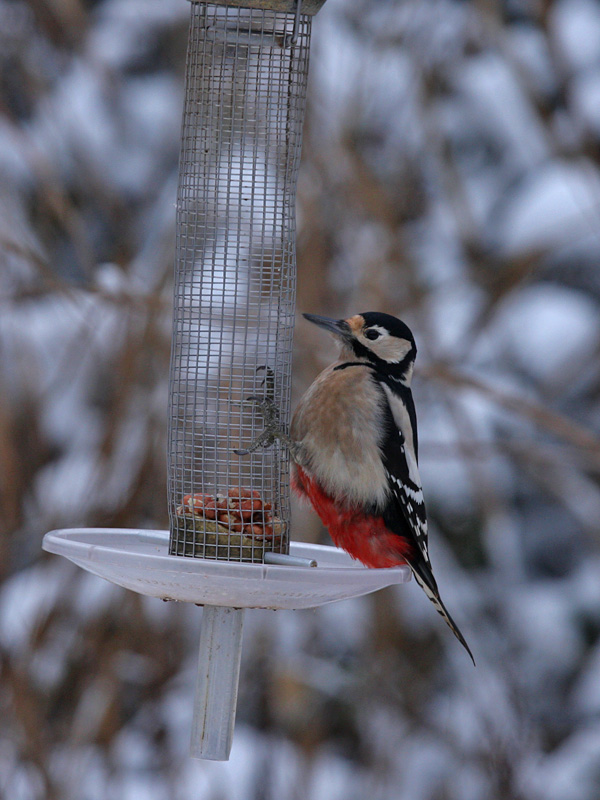
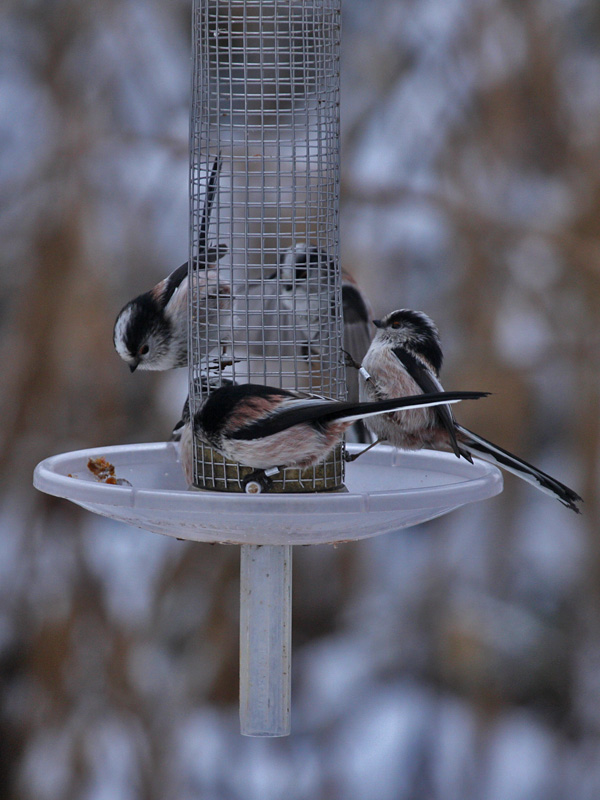
Having enjoyed the luxury of a South Lake hide free of mothers and young children (!!!) for a while, I moved onto the walkway that takes you to the Holden Tower. There was very little (actually, nothing) to see from the Robbie Garnett or Stephen Kirk hides, but the feeders on the other side produced close-up views of a Great Spotted Woodpecker and a decent flock of Long-tailed Tits. All the other usual suspects were present, but I didn't see a Brambling.


The Woodpecker stayed for a good five or six minutes, but was eventually - and annoyingly - bullied off by...


Onto the Holden Tower itself, which was surprisingly pretty full (or perhaps not surprisingly!). There were, apparently, two small (c.20 and c.10 birds) flocks of probable Snow Buntings observed to the right of the Tower. Unfortunately I didn't see them when others did. I did infact see a small flock of something moving North along the Dumbles, but could not claim them as Snow Buntings. I kept up a vigil when the hide emptied, but did not see them again.

Still, Lady Luck certainly didn't abandon me as shortly after the 'Snow Buntings' showed an adult Gannet was seen flying upriver with the tide. Remarkable, and a first for me at Slimbridge - indeed in Gloucestershire. Everyone in the Tower observed the bird flying upriver, but when I was alone I watched it land on the water and begin to (in the main) float back downriver. I tried to photograph it, and although I got nothing of any real worth I was fortunate enough to catch it once with wings outstretched. I've messed about with the image something rotten in Photoshop, and you can clearly see a black tip to the left wing:


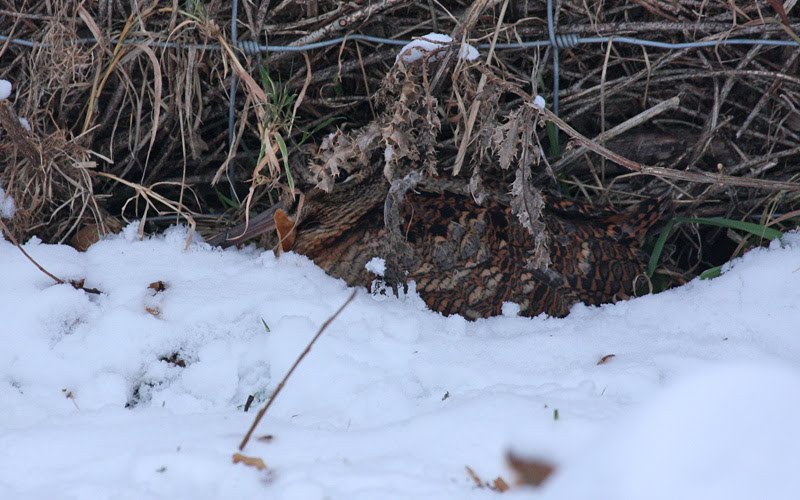
Best was yet to come, though... As I watched the Gannet floating along, Dave Paynter dropped into the Tower to let anyone inside (just me!) know that a Woodcock had been found near the Knott Hide. Dave provided access, and stunning views of the bird were had at a distance of about five yards. Beautifully camouflaged, it didn't move. Behold:


The picture doesn't do the colours justice. Through a telescope it was just gorgeous.

And with that I realised I was really feeling my toes, and so went home to warm up.

22 December 2010

Target for 2011, #1.

I only have so much disposable income, and available birding time. So, my target for 2011 is not to rack up as many birds as I can, and not to try and beat 210 species - which is increasingly likely to be my total for 2010. My goal for 2011 will be to see birds I have never seen before. Simple. The list will be embarrassingly long, and will have some pretty mundane stuff on it... but it feels like a better and more worthwhile challenge than going for numbers. I can - in the time available to me - specifically focus on visiting places where the birds on my list might be found... and I won't have to bother about making trips to get oh, Cattle Egret, Ring-necked Duck or Great Grey Shrike on my yearlist. They can be looked upon as luxuries.

Of course, the year definitely won't pass without a few good twitches (indeed, I'll target a few that may require a twitch), but if it comes down to a straight fight between two potential lifers I want to know what my priorities are.

So... as a first pass long in advance of the new year:

Bean Goose
Pale-bellied Brent Goose and Black Brant
Ruddy Shelduck
Eider
Common Scoter and Velvet Scoter
Lesser Scaup
Red Grouse
Black Grouse
Quail
Corncrake
Red-throated Diver
Slavonian Grebe
Red-necked Grebe
Great Shearwater
Leach's Storm Petrel
Purple Heron
White-tailed Eagle
Hen Harrier
Honey Buzzard
Rough-legged Buzzard
Great Bustard
Stone Curlew
Dotterel
Jack Snipe
Arctic Skua
Caspian Gull
Glaucous Gull
Roseate Tern
Little Auk
Long-eared Owl
Tawny Owl
Hoopoe
Lesser Spotted Woodpecker
Wryneck
Woodlark
Shore Lark
Richard's Pipit
Water Pipit
Citrine Wagtail
Nightingale
Bluethroat
Ring Ouzel (more time than any other will be swallowed up by this, no doubt)
Grasshopper Warbler
Icterine Warbler
Crested Tit
Bearded Tit
Penduline Tit
Chough
Common/Mealy Redpoll
Snow Bunting
Cirl Bunting

I think 30 of these would be good to set my sights firmly on (55 on the list - and I want a target I can reach!). Need to narrow it down, now. It may sound like a pretty unsophisticated birdy goal to just want to see these birds, but the reality is that's where I still am - looking to enjoy for the first time many birds that many others will be sick of by now!

19 December 2010

Good Garden Bird.

I have a moan about the paucity of birds visiting my garden, and then today this turns up. Maybe I should moan more often...

09 December 2010

Garden Green Woodpecker, and a moan.

Green Woodpecker in the garden this morning. Great! Yeah, but the high quickly turned to a low as I started pondering the failure of my garden - and excellent feeder setup - to attract a regular and diverse crowd of birds. The 'regulars' (and I use that word loosely) are:

- Up to 15 House Sparrows. They often descend to fight it out for one of the eight available feeding spots.
- A smattering of Blackbirds.
- Two Robins.
- One Dunnock.
- One Wren.
- Three or four Collared Doves and the usual Woodpigeons.
- Flyover Black-headed Gulls, Common Gulls, Herring Gulls and both tiers of Black-backed Gulls.
- Occasionally a few Blue Tits and Great Tits grace us (but these are really rare visits).
- Even more occasionally a Goldfinch or two will remeber we have Niger Seed on tap, too.

Beyond those 'usual suspects' though, it's slim pickings. It's a typical suburban garden, but one that birds just don't seem interested in. The feeders and the tree they hang in are even out of the reach of any cats that might wander past. They've been up - stocked with food purchased from the RSPB - for over four years. In that time the only other birds I've seen using them have been:

- A female Siskin in 2007 (which was good, I'll admit).
- One instance each of a female and male Blackcap.
- One male Greenfinch.
- A small troop of Long-tailed Tits (that didn't stop).
- Tiny numbers of Chaffinch. Tiny.
- One Coal Tit.
- A Chiffchaff - extraordinarily briefly - two summers ago.
- Last winter a Mistle Thrush chould be seen most days in a neighbour's tree. In the same tree I spotted four Redwings one day.
- Also last winter a rather desperate looking Fieldfare was mooching around underneath the feeders. Indeed, when things were pretty desperate last winter for birds I put loads of food out for the birds, kept the areas free of snow, and still nothing came to take advantage of it.
- On the raptor front, we've had one Peregrine soaring way overhead, a Sparrowhawk stay for about fifteen seconds on a fence and a Buzzard erupting out of a large hedge and then pursued off by Gulls and crows.

That's it. It may appear to be a good selection (my garden list stands at 40)... but spread that over four years and an interesting bird (and right now I'd rate a Greenfinch, or even a regular Blue Tit, as an interesting bird) is a spectacularly rare event. It shouldn't be like this.

I visit family and friends' houses, with no better setup than me, and birds pour in all the time. Not here. Put the food out and the birds will come, my arse.

05 December 2010

Surrounds of Hawling.


The area around Hawling is pretty great, isn't it? If something flies, you see it. Today it was at its best - practically cloudless, practically windless and rammed with birds.

So. Many. Fieldfares.

I went for the Hen Harrier that had been seen a few times in the last week. Alas no sign. Raptor action extended only to five Buzzards, three Kestrels and one probable Merlin disappearing rapidly into vegetation.

I always figure that two and a half to three hours is fair game for a location, however the profusion of Redwings, Skylarks, Yellowhammers, Corn Buntings and Linnets (big flocks of the last two) actually kept me occupied for longer. I think I spent nearly four hours checking out the various sites. There were also smaller numbers of Chaffinch, Wren, Dunnock, Goldfinch, Common Gull and Stock Dove (oh and, y'know... corvids). Finally, a Grey Heron flew over the 'Short-eared Owl' field. The same field also held a single Brown Hare.


Still, the magical moment I had hoped for - when my first ever Hen Harrier would obligingly soar above me cast in distinctive silhouette against the pale blue sky - failed to materialise. It will though. It will.

03 December 2010

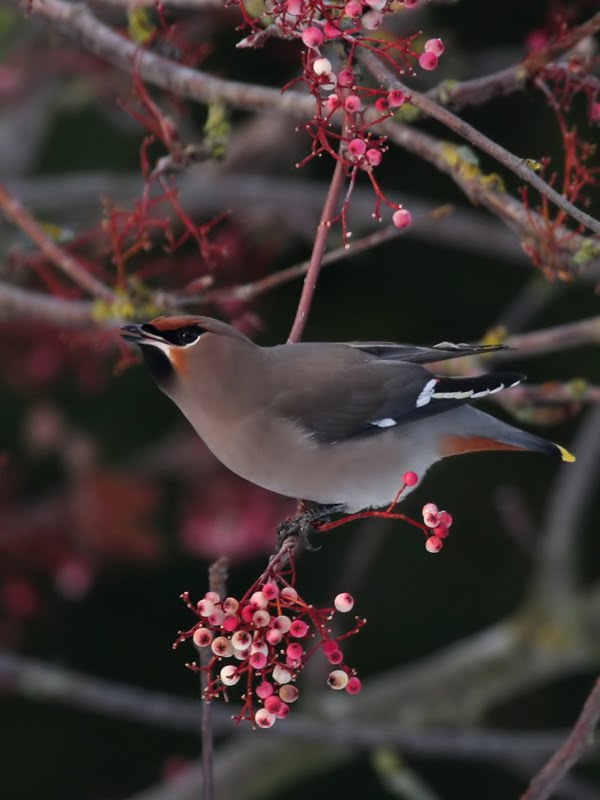
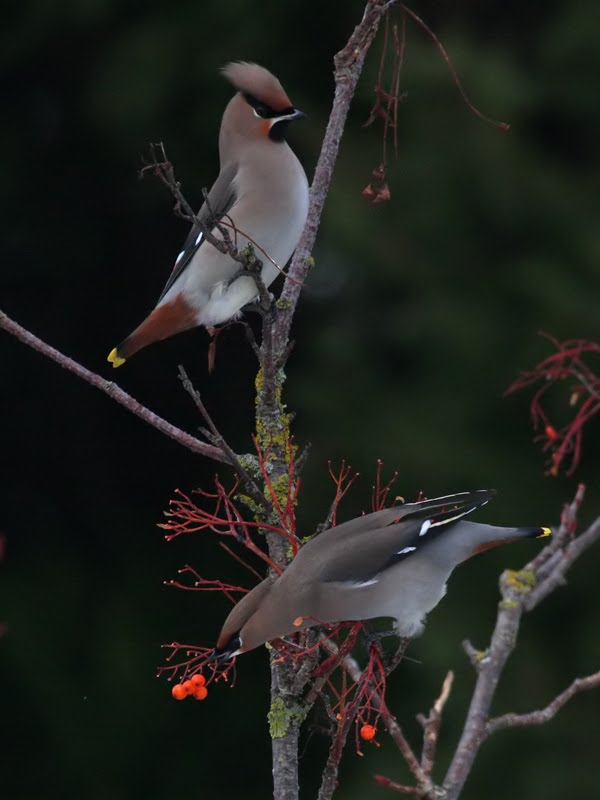
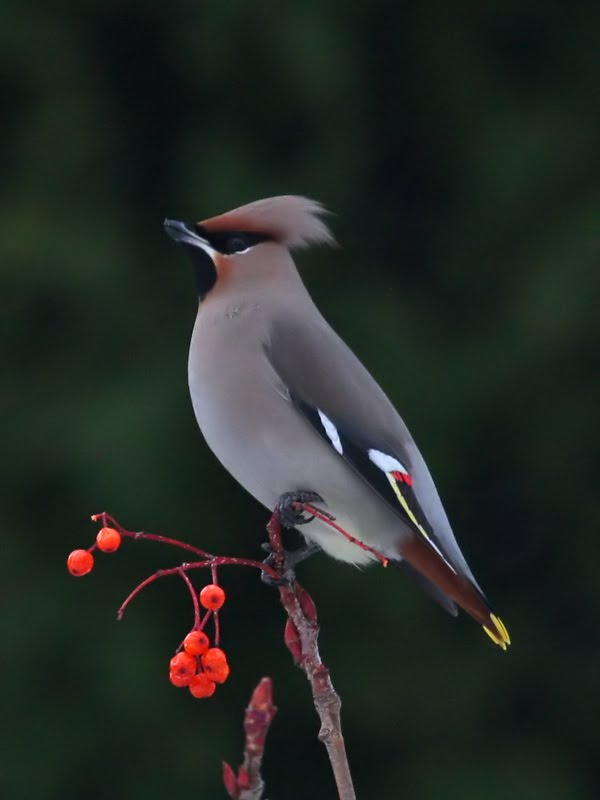
Waxwings.

Another half-day from work (have to use them up!), another for the year list. The Waxwings (year tick 210) in the cemetery off New Street in Ledbury were a wonderful treat. Between 30 and 40 birds, I reckoned. Unfortunately the Sun disappeared as soon as I arrived (after such a clear morning, too!), so photography was not the order of the day. Twas gloomy. So I oggled, and cooed, and generally decided that these birds are just too perfect. I did take some snaps, but only those of a someone stuck at 'camera grade one'.


Truly, it is hard to drag oneself away from these things. This was by far my most intimate Waxwing encounter and I'm tempted to revisit if they stick around. I left the cemetary to a chorus of Waxwing calls. Joyous.

Oh yeah, a female Crossbill dropped in very briefly, too - just about id'able in the middle distance gloom as I left. Which I thought was odd.

01 December 2010

All I want for Christmas...

...is one of these!

19 November 2010

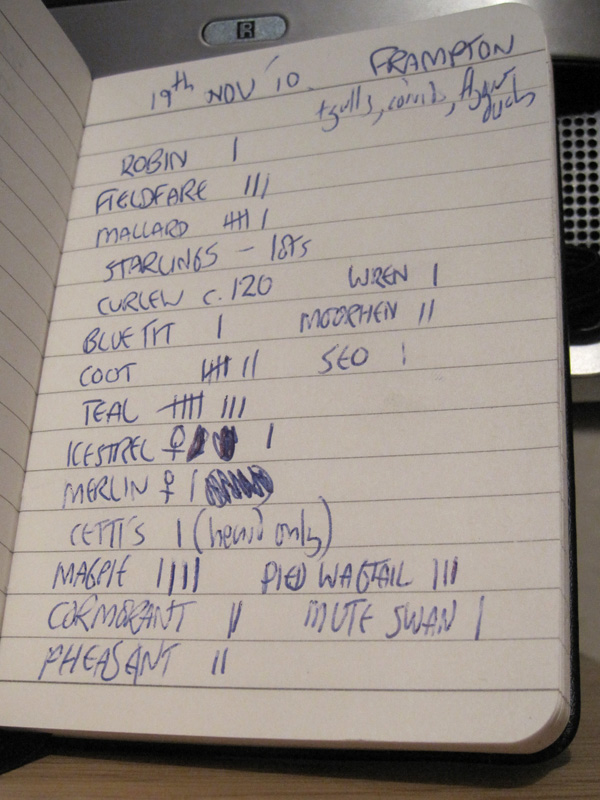
150 Minutes on the 100-Acre Viewing Platform.


Having been reminded on Thursday afternoon that I had four and a half days still to take as holiday this year, I legitimately ducked out of work for a spot of Friday afternoon birding.

Frampton was beautiful (always is), and the 100-Acre / Green Lane area blissfully empty. Blue skies, sun, no wind. I was hopeful of something worth seeing. My pre-determined shift would run from 1400hrs to 1630hrs.

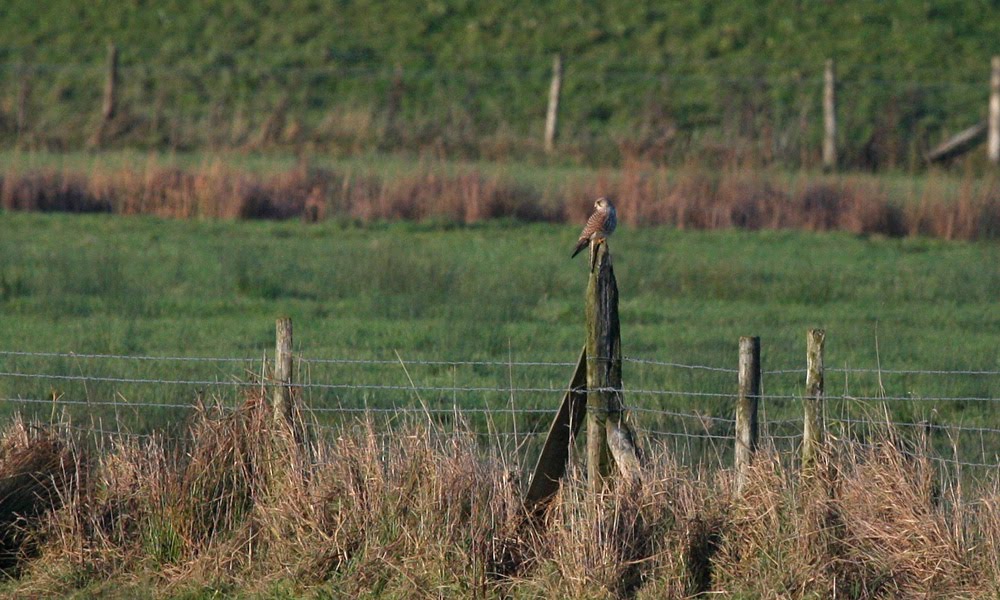
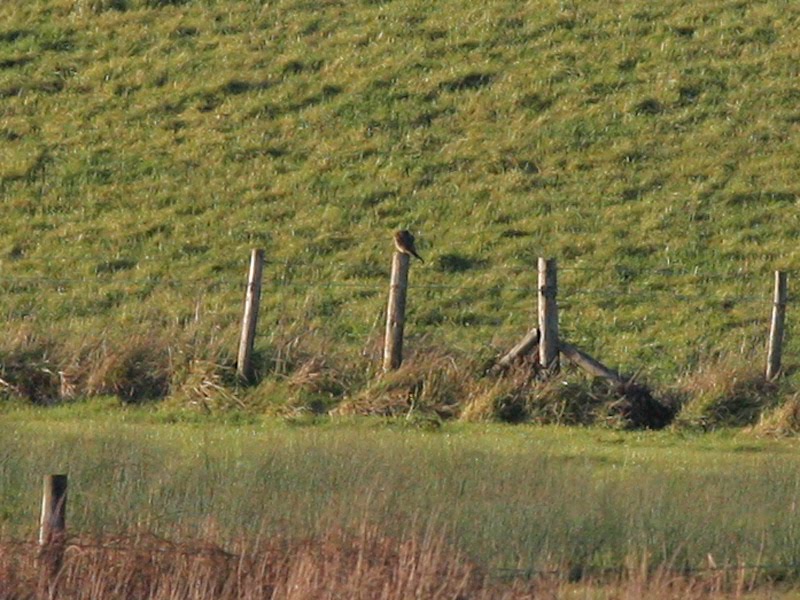
I'd thought there would be more Fieldfare about, but only three showed from the platform. A large flock in the trees enroute back to the canal made up for it, though. The main field infront of the platform was coated in Curlew - rarely taking flight but constantly piping away to each other. The Kestrel sat on the fenceposts to the right, frequently dropping to the ground to take (presumably) worms.


My notes say female, but should of course read male... it's only worth taking one's gloves off if absolutely necessary!

The Merlin was perched on the very far fenceposts, and so was never really within range of my camera. Respectible views were obtained through the scope, though, before the bird flew off at about 1515hrs. Throughout my audience, it appeared to be hunting Starlings (generously interspersed throughout the Curlew flock).

A Short-eared Owl showed up at 1545hrs, and was immediately harassed upwards and north-east by an army of Gulls and corvids. It came back ten minutes later, working its way along the far fenceposts where the Merlin had been stationed before disappearing over the river wall. Finally, at about 1610hrs, I was pleased to pick it up perched on the nearer fenceposts to the right-hand side of the platform, after which it finally obliged with a close fly past... before once again being chased off by corvids - this time towards Slimbridge. Even in the fading light I could've tried to take a good photograph of the Owl... but I decided I would rather just watch it.

The following are the finest pictures you will ever see of a Merlin (without a head) and a Short-eared Owl.


I also viewed a reasonable flock of Starlings wheeling around the Slimbridge grounds and large numbers of Lapwings moving upriver.

It was damn cold by 1630hrs.

14 November 2010

Red-breasted Merganser.

Despite foggy conditions the first winter drake Red-breasted Merganser (year tick 209; lifer 222) at Bredon's Hardwick (nr. Tewkesbury) was an easy target. At the five bar gate I bumped into a bloke who had just finished doing a wildfowl count. He confirmed the bird was still present. Nevertheless, it was 45 minutes before it showed again - probably lurking behind one of the trees or the island so inconveniently positioned in the middle of the lake. Once it showed, it fed with gusto but gave good views during the brief periods it spent above the water.

A Common Sandpiper was a welcome surprise.

13 November 2010

Probably not a Water Pipit.

After the good birds (Eider, Scoter, Divers, Little Auk, Bonxie, Arctic Skua) seen at various points along the mouth of the River Severn this week, this morning I took a trip to Severn Beach in the hope of grabbing a straggler. Unfortunately two and a half hours over the high tide produced little sparkle.

I did have some Pipit-related anxiety, though - infact, I still do. Watching a Skylark pottering about in the vegetation from the footpath, I got a very quick look at an interesting Pipit (c.20 yards away). Please note, this was an interesting bird because I've never seen a Water Pipit.

It wasn't a Meadow Pipit, that was for sure. I've seen many Rock Pipits, throughout the year, and never seen one with such a pale white and well-marked ('clean') supercilium - and matching submoustachial stripe. These two features leapt off the bird. I am not accustomed to seeing Rock Pipits with such a well-marked face.

I also clocked the overall hue of the upperparts before it flew (out of sight but not too far, which bothers me). Grey. I am confident it wasn't an olivaceous grey - as I might expect to see on a Rock Pipit. As a dominant characteristic, I'd plump for pale grey. The light was good and even so I didn't think optical tricks were at play.

Now, I would definitely clock winter Water Pipit if it had the colour of the bird that was at Farmoor Reservoirs recently:


That bird conforms to what I'd expect a winter bird to look like. Pale brown. My Collins says that winter Water Pipits are paler than winter Rock Pipits. The bird in that picture is satisfyingly pale, as was mine. Indeed, my Nils van Duivendijk sums the difference up as "upperparts brown-grey, paler and greyer than Rock w.". I saw mine as a pale grey, but perhaps pale brown can easily convert to pale grey if one is fresh to the species and not sat on top of it. My memory is of pale grey, though.

Thing is, what else could it have been? I've looked at pictures of littoralis, but they don't have the same obvious and clean supercilium my bird had.

I'm just confused because it seems obvious grey (albeit olive grey) on the upperparts leans more towards Rock Pipits, and brown (albeit pale) towards Water Pipits... and yet the supercilium and submoustachial stripe were both as as plain as day. I wish I'd seen it for longer. I waited in the hope it would come back, but it did not.

In conclusion I may have seen a Water Pipit at Severn Beach today... or I may not. I can't tick it. Damn.

03 November 2010

American Bittern and Green Heron.

I really, really wanted to go, but didn't want to admit to myself how much I wanted to go. Inevitably, I went. Departure from Gloucester at 0530hrs, arrival back in Gloucester 2030hrs.

The weather - all day - ranged from threatening to rain, to actually raining. Fortunately, it was only threatening whilst I was with the American Bittern (year list 207; lifer 220). This made waiting outside the hide (0830ish to 0930ish) tolerable. The bird spent it's time in an area north west of the Tower Hide (an excellent hide), so good views from both ends of the hide were not possible.

Still, I thought that behaviour inside was pretty good. Once those at the front had seen it well, they generally moved on allowing others access to the front. It wasn't a quick process, but it seemed to work. I was concerned that a front of serious-types would monopolise the good views, but happily not so. At least, this was the impression I got. In addition, those with scopes already set up were good enough to let those yet to get that far glimpse the bird to alleviate any fears of it buggering off just as they made it into the hide! There was perhaps a little frustration about at not being able to pick it up through bins, but this was because it was only possible to search with one's scope it if you were seated, or had a good perch at the best end of the back wall. If you were waiting your turn, and thus still standing with only bins, it was impossible not to feel a little anxious.

The bird was quite settled, though, and by the time I made it to the 'front benches' (1015hrs) I enjoyed a good views as the bird moved slowly left along the ditch it was favouring (juncus, juncus, juncus, red leaves, juncus!). I'd had a nice view. Conscious that others were as keen to see it as I was, and conscious of my plans for the rest of the day, I fired off a few lousy photographs (compiled below) and skedaddled.

It seems it stayed out in the open for a bit longer after I left (about 1045hrs), but didn't come any closer - at least until the afternoon when good views were had from both hides. In retrospect arriving later in the day might've been a good move as the crowds (myself included) all turned up early morning. Still, I am happy with what I saw... but envious of those who can easily go again!

Whether you get a long view, or a shorter one, provided you are patient the bird is obliging.
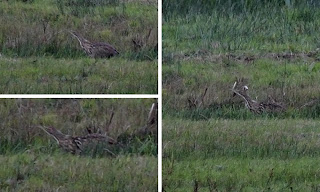


Also, thank-you to the CBWPS for letting the public in to see the bird, and shame on those who didn't stick a couple of quid in the collecting bucket. Judging by the number of people present, and the amount of money in the bucket, lots of people just didn't bother.

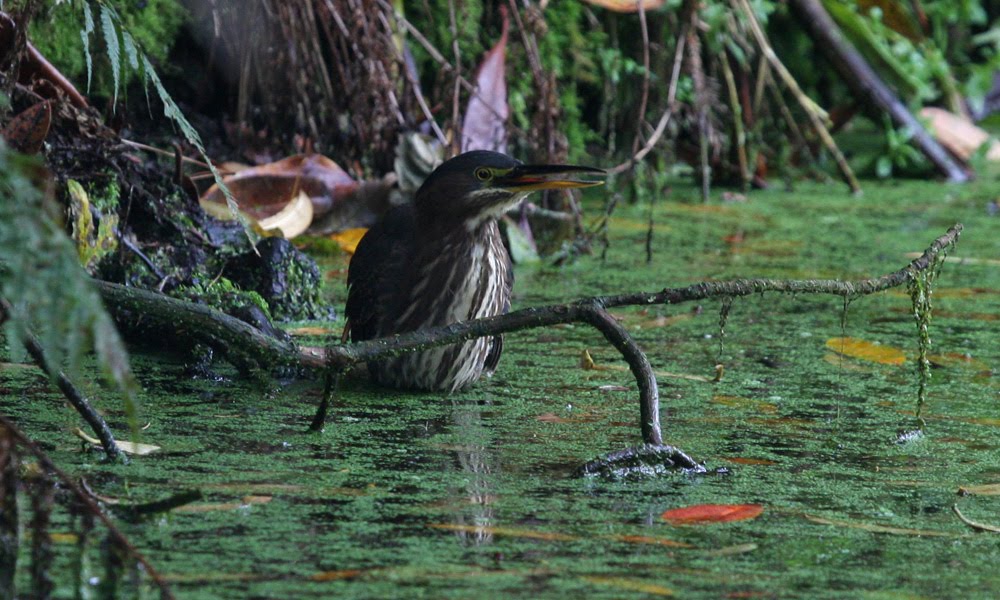
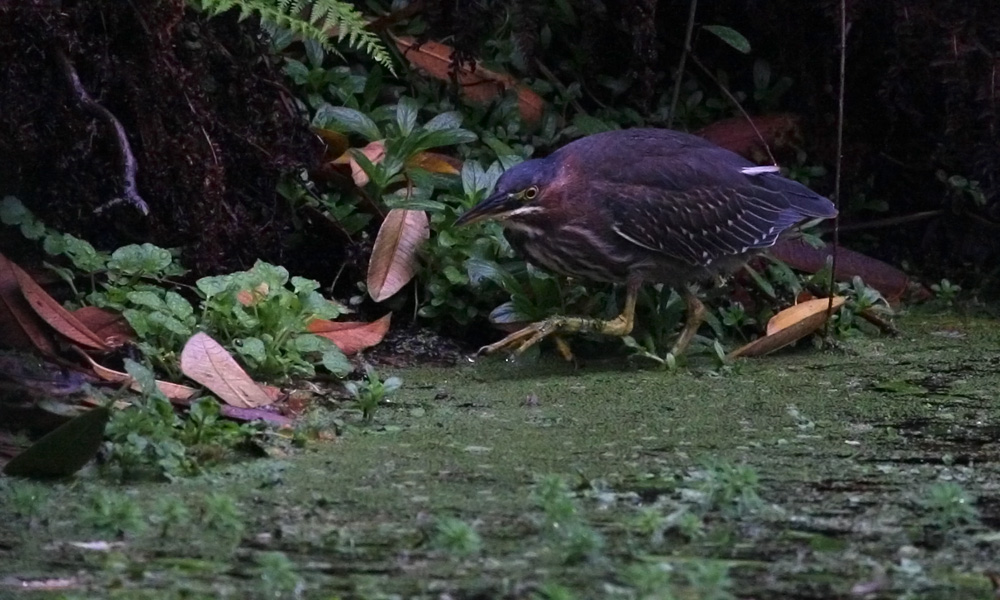
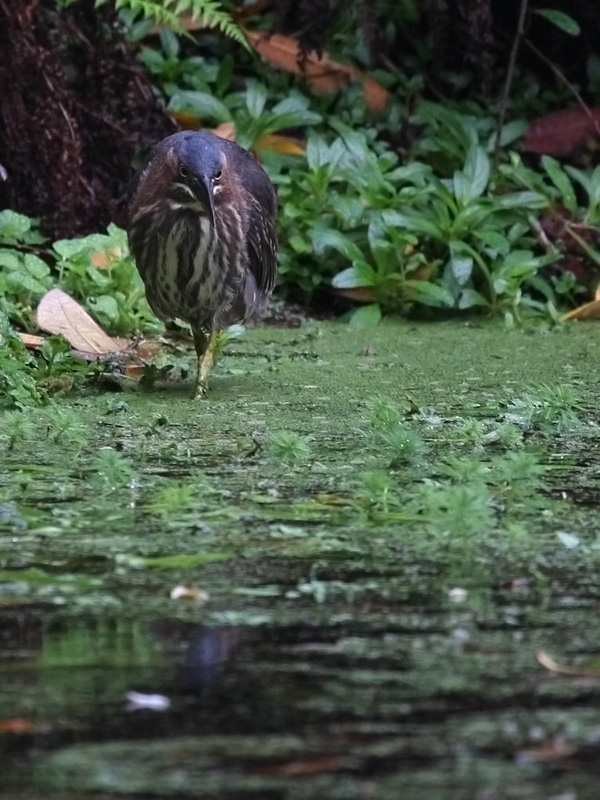
Next stop was The Lost Gardens of Heligan, and their resident cash cow - I mean, Green Heron (year list 208; lifer 221). Easy to find, as the rain reached it's peak for the day, around the edge of the top pond. Lovely scope views were a doddle to obtain. No real light for photographs, but I took some for the record (they're all very dark!).
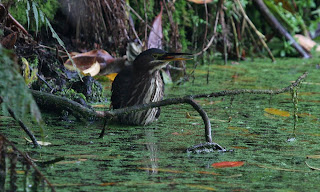


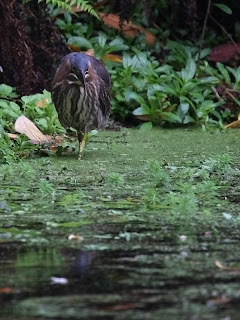


All done by 1330hrs.
There were three hours of useful daylight remaining... enough time to get to Berry Head and have an hour on site. The main motivation was the possibility of Cirl Buntings. Alas, I saw none. Indeed, the fare from both ends of the peninsula was poor. No good warblers in the wood, and only Gannets, gulls, Fulmars, a Kittiwake, Cormorants from the end. Possibly a couple of small Skuas but I'm not skilled enough at sea watching to be sure. A good spot, though, for sure - made pleasant (even without any good birds) by the weather finally breaking and some late sunshine. I enjoyed looking accross the bay to Exmouth, where I could see the brightly coloured beach huts - one of which we use when visiting the town.

Should've gone back to see the Bittern again, though, really! Would probably have gotten some better views of it, but I would also have got home much much later than I did. I was really VERY tired on the long drive home, so from a common sense point of view stopping at Berry Head (essentially on the way home) was not the worst idea in the world.

All things considered a successful day, and one that helps dim the memory of dipping the Lesser Kestrel (my other long twitch this year).